
What is Title Search: Process, Challenges, Automation and AI Best Practices
 Oct 5th, 2026
Proven real estate photo editing techniques play a critical role in MLS performance. Here are seven essential techniques, including white balance correction, sky replacement, virtual staging, and digital decluttering, to create buyer-ready and MLS-compliant property listings.
Real estate photo editing has become almost the be-all and end-of today’s property marketing. If your property photos don’t grab eyeballs, your listings fail at first contact. Buyers search for homes by scrolling through, comparing, and shortlisting homes online often in seconds. Therefore, on MLS platforms like Zillow and many more, and broker’s own websites, photos determine whether a buyer will click on a listing, save a listing, or skip a listing.
Today 90% plus buyers search online before purchasing or renting a property, and of these 85% choose the property based on the photographs of the property. These numbers showcase the criticality of having well-lit and enticing real estate photos on your property listing site.
Regardless of how nice a house may be, poor-quality photos (i.e., poorly lit, distorted, or cluttered) can make a beautiful property look like a mess. As such, professional photo editing for real estate has become a key component of modern-day property marketing.
When edited correctly, photos don’t deceive potential buyers; they simply allow them to view the home in its absolute best condition just as a professional stager does when staging a home in person.
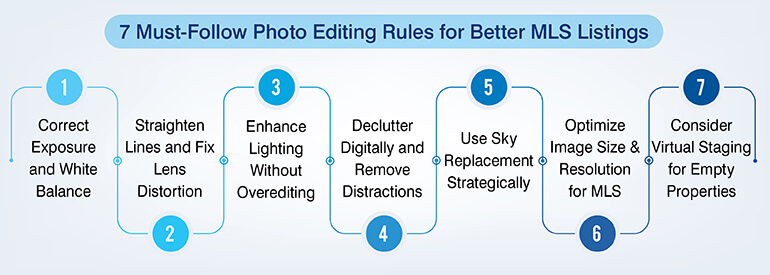
In this article, we will explain the top seven rules for real estate photo editing to produce the highest performing MLS listings and attract the most buyer interest.
Many of the major MLS platforms have strict standards concerning the minimum acceptable image dimensions, format, resolution and content. Any MLS photograph that is blurry, stretched, overly saturated or significantly altered may cause your listing to be rejected or flagged which may prevent your listing from being activated quickly.
In addition to complying with MLS photo editing rules and regulations, the quality of your MLS photographs will impact how a potential buyer views the property.

The higher quality, cleaner, balanced and professionally edited photographs used in your listings will result in:
Don’t forget, regulatory authorities can impose substantial fines of up to $ 1.1 Million, for using misleading real estate property images.
Professional property photo editing is not intended to alter reality; it is intended to correct the limitations of the camera that photographed the property so that it presents itself in a better fashion. Here are top real estate photo enhancement techniques for MLS listings.
Color exposure and white balance are key elements to achieve successful real estate property photo editing for MLS listings. Raw Real Estate Listing Photos often include mixed lighting created by windows and indoor lighting, which can create color casts (yellow or blue), darken certain areas, produce areas with uneven exposure, and significantly reduce the impacting buyers who view your MLS listings.
MLS Property Photo Editing professionals correct many common problems associated with Real Estate Listing Photos, including:
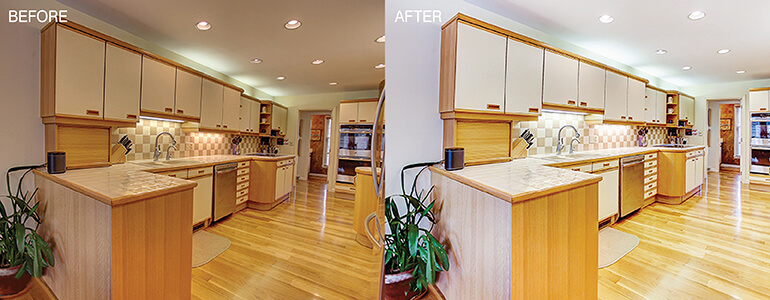
MLS Property Photo Editors use tested and proven techniques to enhance Real Estate Listing Images, including HDR (High Dynamic Range) editing for Real Estate Photography and precise photo correction for property images.
The result of professional MLS Property Photo Editing is images that have a natural look and represent accurate colors for walls, floors and finishes. It enables the buyers to build confidence in your properties and help you receive better performance on MLS Platforms and increase buyer interest.
Turn more listing views into serious buyer enquiries.
Perspective issues are probably the quickest way real estate photos lose their credibility. While wide-angle lenses allow you to capture more of the room, they also warp and twist vertical lines, bend walls, and warp furniture. If all of these elements seem unusual, buyers will have an uneasy feeling about the listing and possibly the home itself. They won’t be able to put their finger on it, but this unease will cause them to lose some of the trust in the listing and property.
MLS property photo editing provides professional corrections of perspective to create a visually balanced and realistic image through the following means:
Straightened lines, clean proportions make a space appear cleaner, more organized, and visually stable. Clean geometry makes a space appear larger than it really is without exaggerating and creates a sense of the property being maintained and professionally represented.
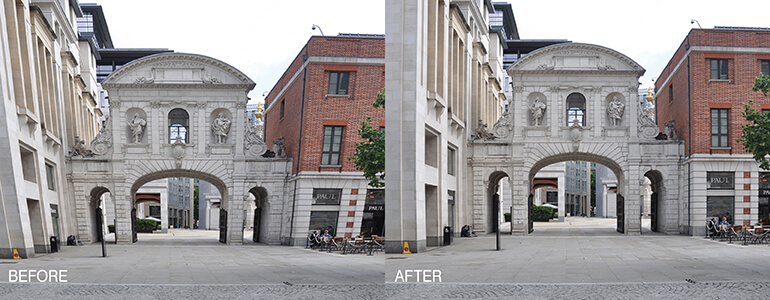
As important, correct perspective allows buyers to create realistic expectations prior to physically viewing the property.
Straight lines and natural proportions, when viewed together, create confidence and quality through photos. Confidence and quality create a stronger first impression of the listing, improve credibility of the listing, and help buyers focus on the space rather than view distracting visual effects created from poor camera angle and/or distortion.
Light from nature has a huge impact on how buyers view interior spaces as comfortable, open, and inviting. Photo editing can enhance natural light to create a brighter, and more welcoming impression of an interior space; however, over-editing will quickly destroy credibility.
When buyers visit an interior space that appears overly bright due to excessive brightness, blown highlights, or artificially created shadows, it creates buyer disappointment. It’s essential to balance the amount of visible light in photo editing to make the interior space visually appealing yet preserve its true character.
Photo editing professionals strive to achieve a balance of light levels in their edited images and avoid dramatic changes. By doing so, interior spaces will be depicted in the best possible light, with sufficient detail visible throughout the walls, floors, and windows.
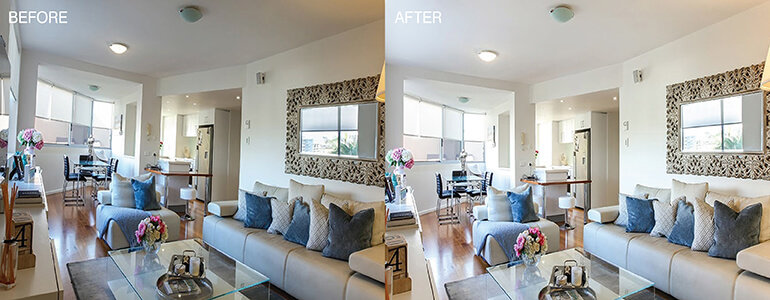
Principles of best practices for enhancing natural lighting include:
When enhancing lighting in your photos are balanced and accurate, buyers will trust what they see and will become confident about engaging with your listing.
Remove all digital distractions and clutter by editing out anything that is likely to pull the buyer’s eye off of the property’s best attributes (rule number 4). Visual clutter will distract buyers from viewing the property’s best qualities and may appear to be cramped or unclean. Editing for digital clutter will help show the property to be clean, neutral and ready to move into.
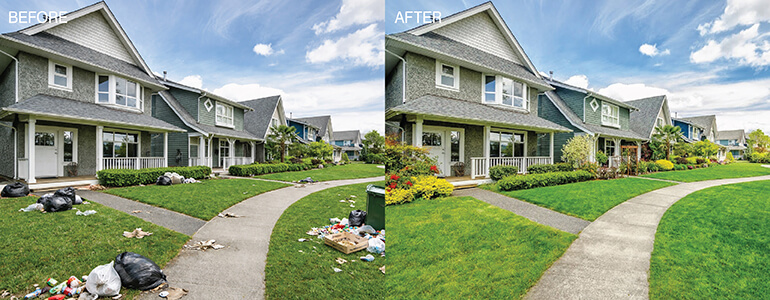
Some examples of things you would edit out of your photos include:
Removing these distracting items, will allow the buyer to see the room layout, how much natural lighting is available and architectural details of the home.
Outsource your real estate photo editing to save hours and dollars.
First impressions are created with the exterior property image, which may be reduced in brightness due to poor weather (overcast or rainy), loss of color, and weakened curb appeal and therefore decreased buyer interest.
The use of sky replacement for enhancing exterior property images will replace dull, overcast or gloomy skies with new, clear, balanced skies that enhance the brightness and welcoming appearance of your property. Used appropriately and effectively, the sky replacement process does not change the natural light, shadows, or colors of the property; but instead maintains authenticity, as opposed to an unnatural/over-edited look.
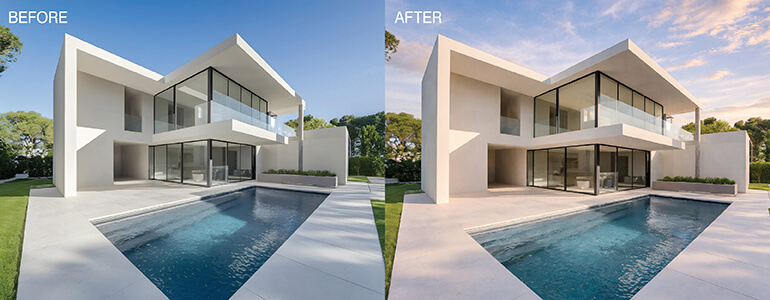
Sky replacement is effective for:
When used responsibly, sky replacement can differentiate your listing while keeping consumer trust and authenticity intact through all marketing channels.
Optimizing your images will allow MLS and other real estate web platforms to provide you with high-quality images that are also easily viewed from mobile devices. Slow loading times and/or image compression will not only hinder the viewer’s ability to clearly view the images, but they may also cause them to leave before even viewing your complete listing.
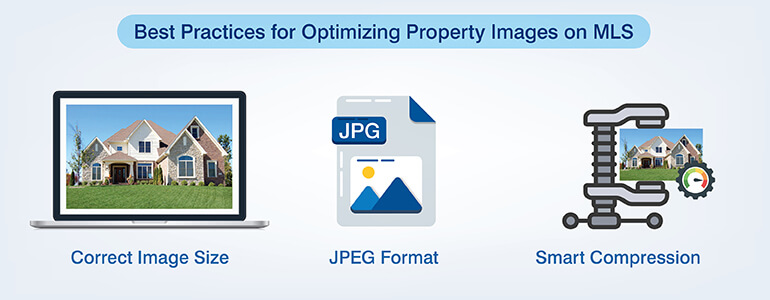
The following are key tips for optimizing your images:
Properly optimizing your images will result in faster performance of your MLS listing and other online real estate platforms such as Zillow and Realtor.com. Optimized images will enhance mobile usability, encourage viewers to stay longer on your website, and ultimately create a greater first impression when viewed online.
Professional real estate photo editing services, whether through in-house editing or an outside service, will always be superior to DIY photo editing tools such as preset-based photo editing applications and filters.
When a home sits vacant it is harder for potential buyers to form an emotional bond with it. This is because an unfurnished home will generally appear smaller, less inviting and less likely to provide a buyer with a clear picture of how they would use their space.
With virtual staging you are able to furnish digital images of a vacant home with appropriately sized furniture, decor and layout indicators to give the buyer a better understanding of how he/she could utilize their space.
When done properly, virtual staging improves the overall appearance of a home without changing its actual condition.
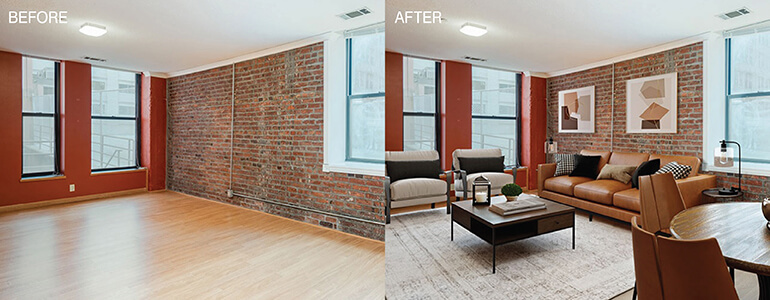
Because virtual staging is so effective at providing an image of a furnished space on a vacant home, it is especially useful for vacant homes, new development projects and investment homes that may have too high of a cost associated with physical staging.
Additionally, it also provides a way to make listings look “move-in” ready and still maintain the accuracy and transparency needed.
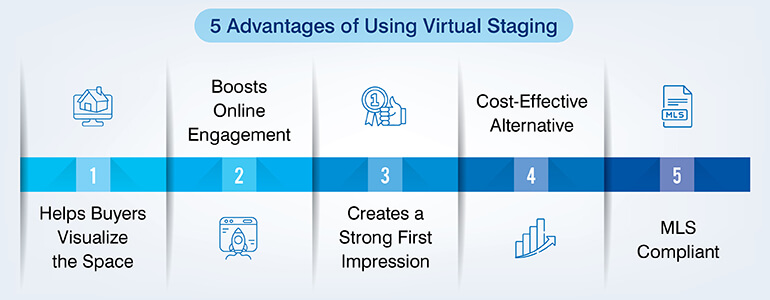
Some of the key advantages of using virtual staging include:
In general, virtual staging is helpful because it enables buyers to envision themselves living in the space. As a result, it typically generates increased interest and leads to quicker, more decisive viewing decisions.
In today’s highly competitive real estate market, property photo editing is no longer a choice. It definitely impacts how visible your property listings are, how strongly they will engage potential buyers, and will they build brand credibility.
Real estate photo editing creates professional looking property images for your listings by adhering to the seven undisputed real estate photo editing rules. It will make your listings appear polished, credible and enticing for buyers.

What’s next? Message us a brief description of your project.
Our experts will review and get back to you within one business day with free consultation for successful implementation.

Disclaimer:
HitechDigital Solutions LLP and Hitech BPO will never ask for money or commission to offer jobs or projects. In the event you are contacted by any person with job offer in our companies, please reach out to us at info@hitechbpo.com